
A growing political storm continues to unfold in Spain as the country’s veterinary sector grapples with the controversial Royal Decree 666/2023. Since 1 January 2025, the Decree, a very strict interpretation of EU law (Regulation 2019/6), has revoked the Spanish vet’s right to dispense veterinary medicines, has severely limited their therapeutic arsenal and has greatly increased administrative burdens for any antimicrobial prescription – with hefty fines in case of transgressions.
Nationwide veterinary strikes
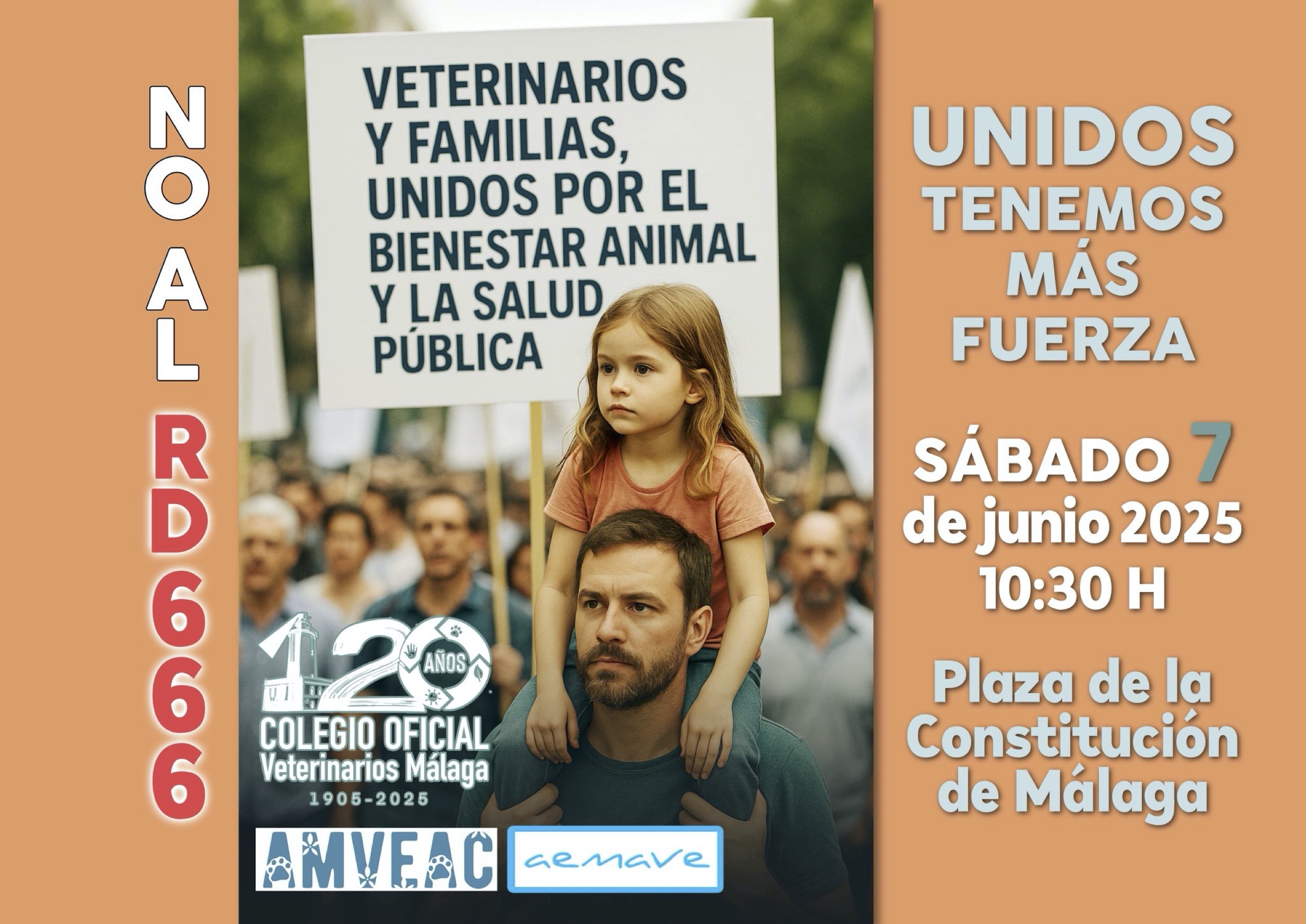
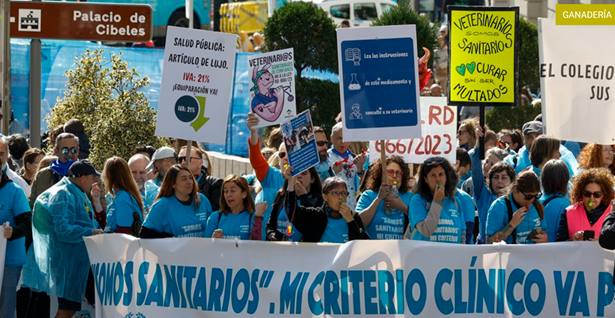
Enacted with the goal of strengthening the role of pharmacies in distributing veterinary drugs, the Decree has been sharply criticised for hampering the clinical autonomy of vets. It would also pose a risk for animal health and welfare, for example when owners of severely ill pets are sent away with a prescription to a pharmacy who may not stock the medication urgently needed – or not for the correct species or in the right format. There have been several nation-wide veterinary strikes over the past months to draw attention to the situation. ‘The next actions are planned on the weekend of June 7th and 8th, with protests in all Spanish provinces,’ announces Álvaro Mateos, executive director of the [statutory body] Consejo General de Colegios de Veterinarios de España (CGCVE) and long-standing Spanish FVE delegate. In March, a Veterinary Crisis Committee was set up, composed of all major veterinary professional organisations, led by the CGCVE.
Mounting concerns of pharmacists’ role
‘Don’t put your pet’s health at risk – always ask your pharmacist first’. On social media, Valencian pharmacists are openly profiling themselves as ‘the best placed health professionals’ to advise on pet medicines, all the while suggesting prednisolone, ivermectine and cefalexin (Kefloridina in Spanish) as the go-to medicines for pain control, parasite control and ‘bacterial infections’, respectively. The Veterinary Crisis Committee has demanded an immediate retraction of these posts, describing them as misleading and harmful to the public understanding of veterinary medicine. And besides, ‘the cascade requires using a group D antimicrobial from another animal species before using a group C antimicrobial for humans.’ No doing so would ‘generate the opposite effect we seek in the fight against antimicrobial resistance’, our colleague adds. In the meantime, the CGCVE has set up an ‘incidence’ mailbox to alert to these and other issues. It has already reported on numerous dispensing problems.
Broad Political Support Emerges
The controversy also resurfaced prominently on April 30, when the Parliament of Navarra voted down a motion urging the central government to reconsider the decree. This rejection was seen as a blow to veterinarians who had hoped for regional momentum in their campaign against the restrictive framework. In a notable turn of events, the Spanish Senate on May 7 passed a resolution requesting that the government repeal Royal Decree 666/2023. This rare alignment with the veterinary profession marked a significant moment in the national debate, raising hopes that the government might be compelled to act. The following day, on May 8, political leaders across party lines voiced their support for veterinarians. They highlighted the decree’s potential to undermine animal health and questioned the government’s coherence in advocating for animal welfare while restricting access to essential treatments.
Government Holds Firm Despite Criticism
Despite increasing political and professional opposition, the government issued a firm response on May 13, rejecting a possible repeal. Officials claimed that professionals have access to a sufficiently broad range of medicines and insisted on the importance of reinforcing the role of pharmacies to prevent misuse. However, some minor concessions were made, including a drop of the level of potential fines and some flexibility in supplying medication for an initiated course of treatment. The veterinary profession considers these insufficient, Álvaro observes. However, ‘as they do not have the force of law, this leaves us in a situation of legal uncertainty. It is also significant that meetings have been requested with the Ministry, but it refuses to meet with the profession.’
Reaction veterinary profession
Veterinary professionals warn that continued restrictions may undermine the sector’s ability to respond swiftly to emergencies, potentially compromising both animal and public health. ‘We regret that the veterinary profession was not consulted when this legislation was first drafted. Veterinarians are the guardians of antimicrobial resistance, not the culprits,’ stresses Alvaro. Sadly, it is not only a problem with antimicrobials, ‘but affects all veterinary medicines, with a potential impact on the health and welfare of animals under our care.’ To be continued.
The topic will be addressed at the upcoming general assembly of the Federation of Veterinarians of Europe in June.