
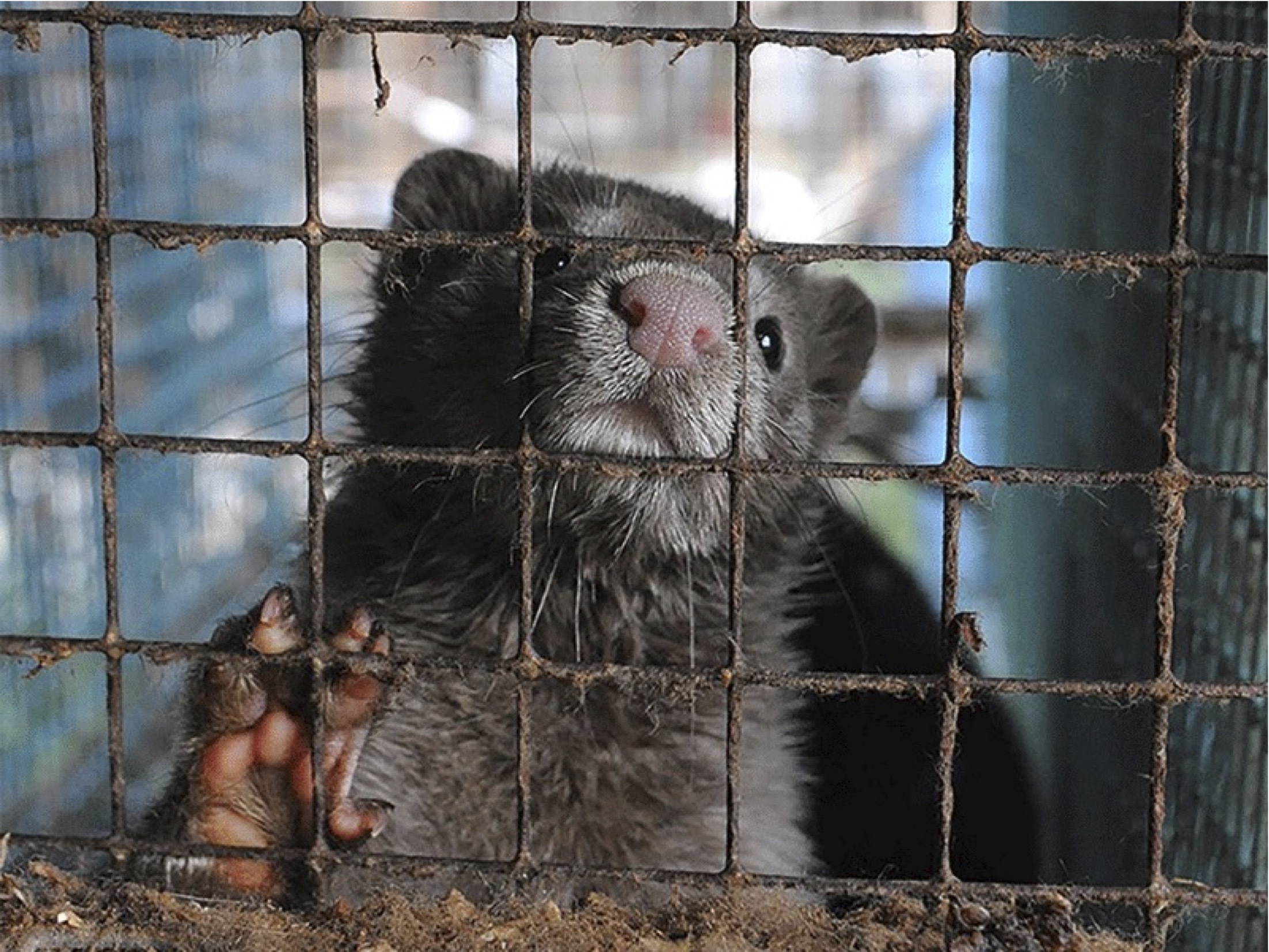
A new report commissioned by Eurogroup for Animals examines the economic implications of two possible approaches to fur farming in the EU: a five-year phase-out of the sector or the introduction of higher welfare standards.
Vets call for a global phase-out
The analysis estimates the cost of a five-year phase-out at around €144 million, compared with €201–920 million for implementing higher welfare standards. It also identifies wider societal costs associated with fur farming, including pollution, resource use and invasive alien species.
The findings are relevant to the veterinary profession. In November 2025, FVE, FECAVA and WSAVA called for a global phase-out of fur farming, stating that the behavioural and physiological needs of wild and semi-wild species such as mink and foxes cannot be adequately met in conventional cage systems. Their position also highlighted animal welfare, public health and environmental concerns from a One Health–One Welfare perspective.
Phasing out less costly than raising standards
The economic analysis adds a further dimension, suggesting that a managed transition could be less costly than upgrading production systems, while questions remain over whether higher standards could adequately address the underlying welfare, health and environmental concerns.
‘The veterinary profession has been clear: the behavioural and physiological needs of fur animals cannot be adequately met in conventional farming systems,’ said FVE Executive Director Nancy De Briyne. 'This report shows that moving to higher standards may also not make economic sense.' FVE calls upon the European Commission to bring forward its Communication on fur farming and provide a clear direction for the future of the sector.
‘Fundamental welfare problems’ with keeping wild species caged
Eurogroup for Animals stresses that ‘changing standards cannot resolve the fundamental welfare problems associated with keeping wild species in cage-based systems,’ echoed by EFSA’s scientific opinion on the matter. Previous research has estimated wider societal costs at around €446 million annually, including pollution, resource use, local nuisance and invasive alien species. Read the full report here.
(photo ©Eurogroup for Animal Welfare)