
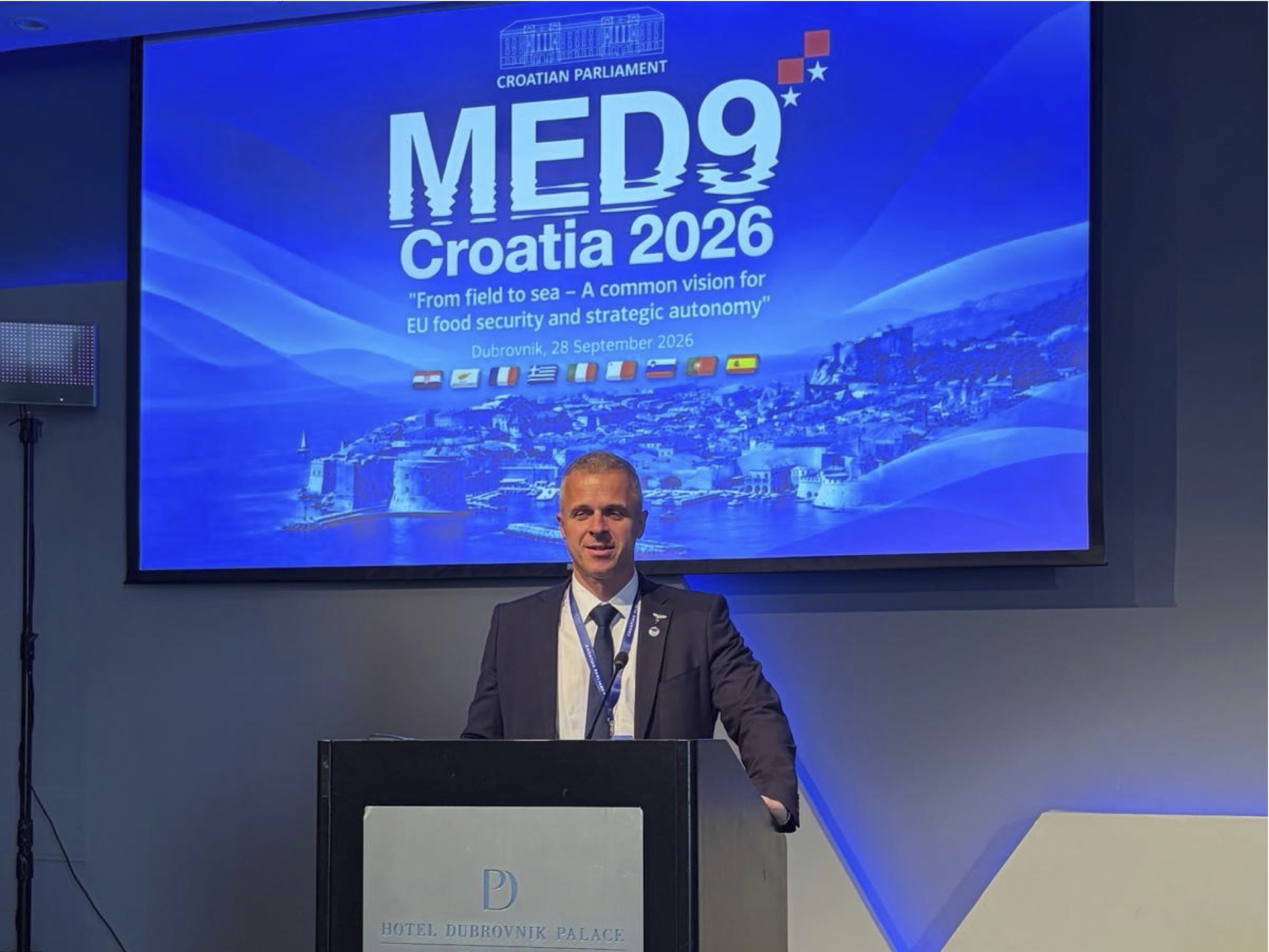
Strong veterinary systems are essential to European food security and resilience, delegates heard at the MED9 Interparliamentary Conference in Dubrovnik. The MED9 brings together nine Mediterranean EU Member States to address shared regional challenges. This year’s conference (“From Field to Sea”) focused on food security and European strategic autonomy.
Strengthening animal health and biosecurity
Climate change is altering the epidemiological landscape across the Mediterranean, with rising temperatures contributing to the spread of vector-borne diseases such as bluetongue, West Nile virus and lumpy skin disease. Delegates stressed the need for EU investment in preventative veterinary infrastructure, surveillance, rapid diagnostics and farm-level biosecurity to address transboundary disease threats.
Veterinary preparedness and food security
The conference also highlighted the need to protect livestock from major disease threats, including African swine fever and avian influenza. Increasing marine temperatures are creating additional challenges for aquaculture, highlighting the role of aquatic veterinary expertise in animal health, welfare and vaccination.
Veterinary services as strategic infrastructure
Ivan Zemljak, President of the Croatian Veterinary Chamber, emphasised the strategic role of veterinary services: 'Food security begins with healthy animals. A healthy animal requires a strong veterinary system. And a strong veterinary system is one of the foundations of a resilient Europe.'
He stressed that effective crisis preparedness requires not only plans, but also people, infrastructure and veterinary services capable of rapid action to identify threats, contain outbreaks and maintain food production. The conference underlined the importance of integrating veterinary expertise into European food-security and One Health policies.
See also the FVE paper on veterinary preparedness.
(photo @MED9)