
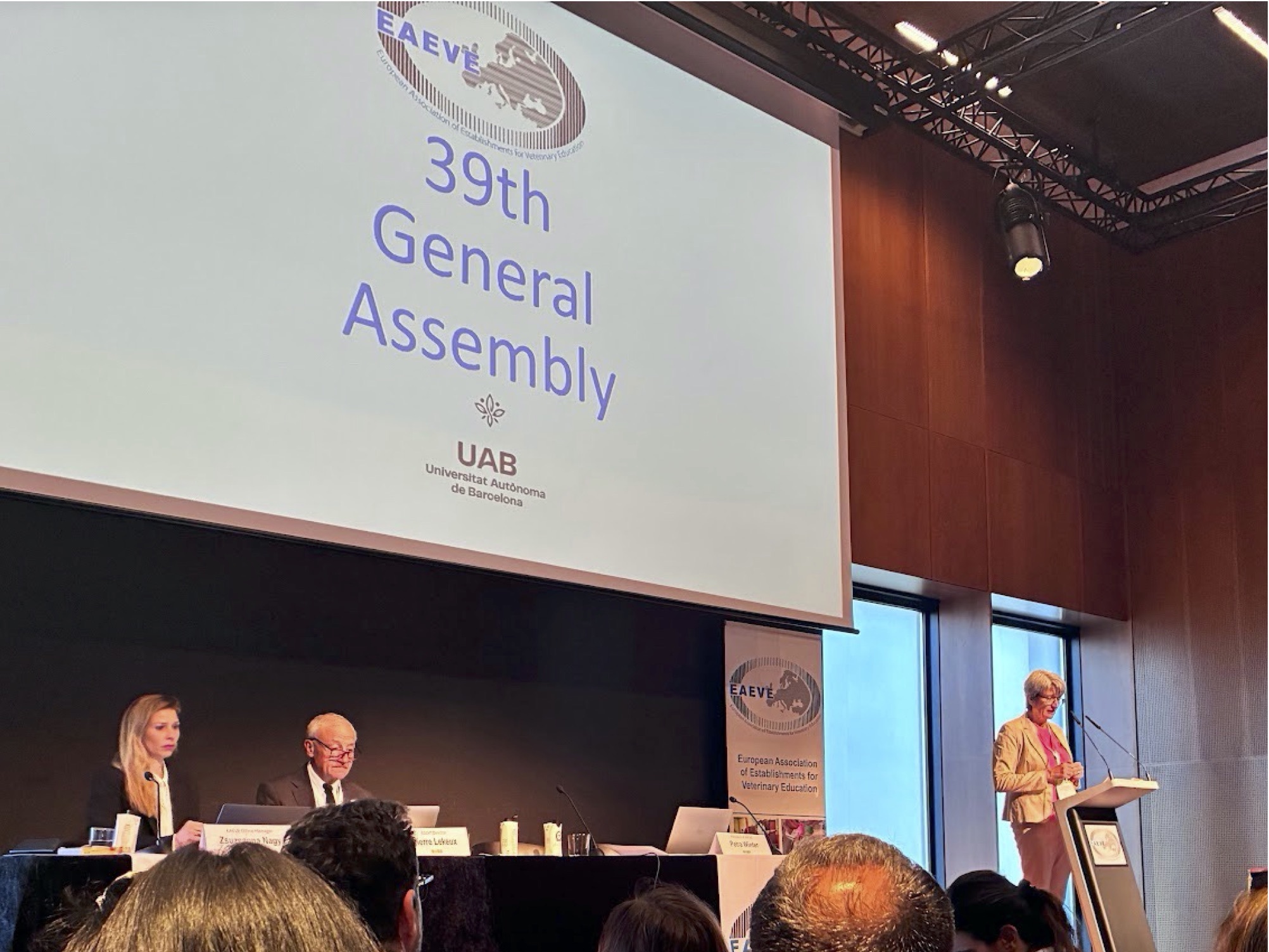
Veterinary educators, practitioners, students and professional organisations gathered in Barcelona on 28 and 29 May for the 39th General Assembly of the European Association of Establishments for Veterinary Education (EAEVE), a meeting that highlighted both the strengths of European veterinary education and the challenges ahead. Day one focused on the updates of the various regions of EAVE members, while day two — 'Educational Day' — focused on teaching and student wellbeing.
Accreditation and international growth
A record number of veterinary schools received full (re)accreditation through the European System of Evaluation of Veterinary Training (ESEVT) for the period 2025/2026, including Edinburgh, Wroclaw, Istanbul, London, Helsinki, Milan, Cambridge, Vienna, Porto, Lisbon, Kagoshima (Japan), Las Palmas, Valencia UCV and Barcelona. Interest in the EAEVE model continues to expand internationally, with new membership applications from institutions in Malaysia, the UAE and Uzbekistan.
Day One Competences
Work is progressing on the revision of the European Day One Competences (D1Cs) framework. The D1Cs Working Group is actively benchmarking global frameworks such as those in North America (AAVMC) and Australasia (AVBC) and plans to release a comprehensive new European D1C draft by December 2026. Furthermore, the newly signed Memorandum of Understanding between EAEVE and the Turkish veterinary accreditation system VEDEK allows for combined national and EAEVE visitations, drastically reducing financial and administrative duplication for member institutions.
Bringing practice into veterinary education
A key message from the practitioner community, represented by UEVP Vice President Jan Bernardy, was the importance of ensuring that veterinary education remains firmly connected to clinical reality. UEVP reiterated its support for practitioner involvement in accreditation visits and educational evaluations, recognising the unique perspective that active clinicians bring to assessing veterinary training. Effective from January 2025, financial support is provided by UEVP. ‘Resources are specifically prioritised for active practitioners whose daily clinical income is disrupted by the 5-day visitations, and who need to finance locums,’ explained Jan Bernardy, adding that participating practitioners will also earn 2 ECTS credits.
Addressing the veterinary workforce challenge
Another topic raised by the UEVP was the growing shortage of practitioners. ‘With up to 20% of veterinarians leaving the profession within 5 years due to burnout or unmet expectations, we are facing an acute practitioner shortage, especially in the large animal sector,’ recalled Jan Bernardy. Discussions focused on whether veterinary schools should adapt admissions processes to attract students who are well informed about the realities of professional life and equipped with the resilience required for clinical practice. High attrition rates among young veterinarians make this an increasingly urgent issue.
Student wellbeing and future skills
The meeting also explored innovative clinical training models, digital tools in veterinary education, and approaches to student wellbeing and resilience. Students, represented by IVSA president Tamy Negrón Garcia, played a central role throughout the discussions, reflecting a growing recognition that supporting future veterinarians requires attention not only to technical competence, but also to professional sustainability and mental wellbeing. The Barcelona meeting underscored a shared ambition, concluded Jan Bernardy, ‘ensuring that veterinary education continues to evolve in step with the needs of practitioners, students and society.’
(photo ©Jan Bernardy)