
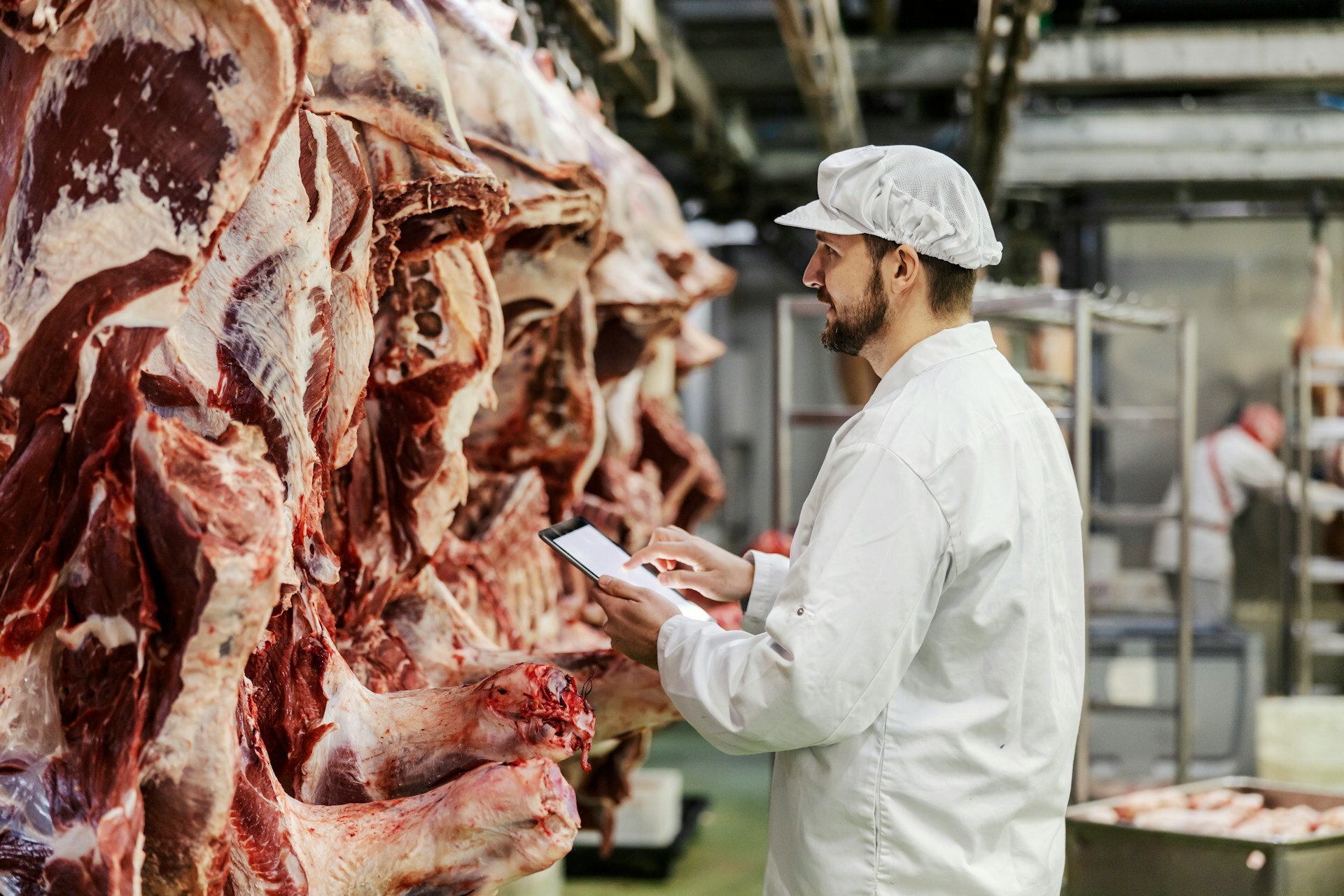
The European Commission is currently finalising new rules that would allow remote ante- and post-mortem inspections in low-capacity slaughterhouses and game-handling establishments, using tools such as video technology and AI-assisted monitoring. Because the proposals affect the role of official veterinarians (OVs), as well as animal welfare and public health safeguards, they have attracted considerable attention across the veterinary profession.
Technology yes, but veterinarians must remain in control
In its feedback on the draft legislation, the Federation of Veterinarians of Europe (FVE), together with its sections EASVO, EVERI, UEVH and UEVP, welcomed the opportunities offered by digital tools but stressed that they should remain an aid to official controls, not a substitute for veterinary expertise. Technology should act as “an extra pair of eyes”, while “a human must remain constantly in the loop”.
Continuous veterinary oversight retained
A key concern for FVE was the original proposal under which an official auxiliary (OA) would carry out inspections on site and only alert the official veterinarian (OV) when an abnormality was detected. FVE considered this ‘inadequate’, arguing that it would undermine veterinary oversight of animal health, animal welfare and food safety.
Following discussions with the Commission, FVE reports a significant improvement. Under the revised approach, the OA will assist the OV, while the official veterinarian will retain remote supervision of ante- and post-mortem inspections. This shifts the OV from a reactive role to one of continuous oversight and responds directly to concerns about maintaining strong veterinary control over critical welfare and safety checkpoints.
Additional safeguards requested
FVE also called for clear contingency plans and mandatory on-site veterinary inspections in the event of technical failures, validation criteria for remote inspection systems, and restrictions on the use of reduced-oversight models in establishments with a history of significant non-compliance.
While supporting innovation, FVE remains cautious about proposals to expand the definition of low-capacity slaughterhouses from 5% to 10% of national production, arguing that the combined effects of reduced OV presence and new technologies should be carefully evaluated before wider implementation.
The revised proposals are currently being discussed with Member States, with consultations continuing through July.
(© photo Getty images/Unsplash)