
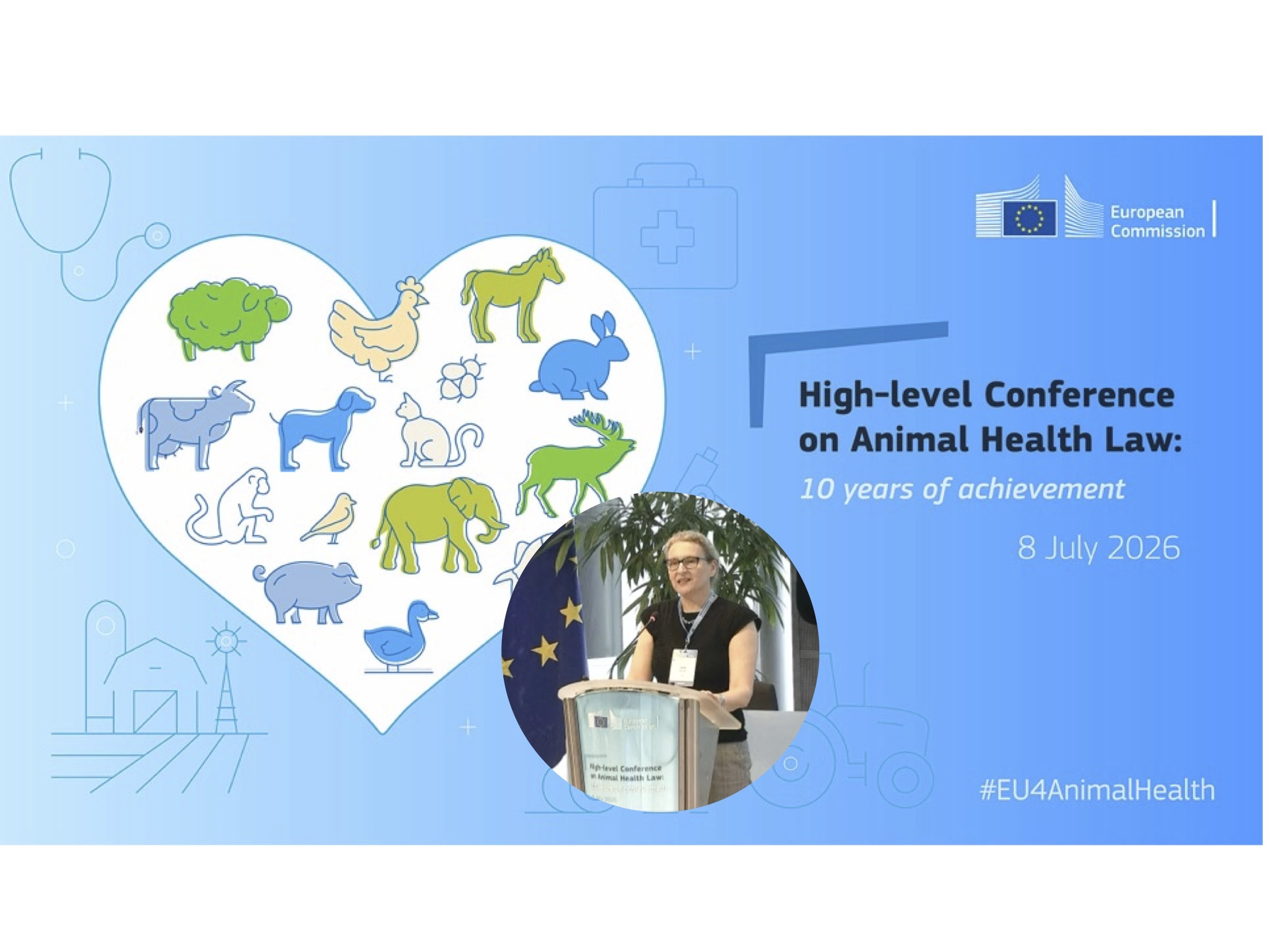
Ten years after the adoption of the EU Animal Health Law (AHL) and five years after its application, speakers at a high-level conference in Brussels on 8 July agreed that the legislation has fundamentally changed the way Europe approaches animal health.
A framework built on prevention
European Commissioner Oliver Várhelyi stressed: 'Rather than reacting to outbreaks, the AHL has established a modern, risk-based framework centred on prevention, preparedness, biosecurity and shared responsibility.' Several speakers stressed that growing threats such as global warming, geopolitical changes and animal movement had led to more frequent and more widespread transboundary animal diseases, such as African swine fever, highly pathogenic avian influenza, sheep and goat pox and lumpy skin disease, making preparedness more important than ever.
Veterinarians at the heart of prevention
Speaking on behalf of FVE, Jane Clark described the Animal Health Law as a ‘major achievement,’ firmly embedding the principle that prevention is better than cure. She called for more investment in preventive measures rather than paying the far greater costs of disease outbreaks and emergency responses. ‘The cost of prevention is predictable – the cost of a crisis is not,’ she noted.
Supporting the three pillars of prevention
She highlighted the three pillars of integrated prevention: animal health visits, biosecurity and vaccination. Animal health visits, she noted, remain underused despite their value for farm-level biosecurity, surveillance and early disease detection. An FVE survey had found significant differences in implementation across Member States. Looking ahead, she called for wider use of preventive vaccination – echoing the FVE position paper – and stressed the importance of vaccination-to-live strategies, investment in new vaccines and diagnostics, and stronger support for rural veterinary services.
Preparedness requires science and cooperation
From the perspective of the European Food Safety Authority, Frank Verdonck stressed the importance of science-based preparedness and described how EFSA provides independent scientific advice. This includes disease categorisation, reporting on the epidemiological situation and predictive modelling, allowing veterinary services to anticipate on disease threats. But preparedness is not just technical, he noted. ‘We need social scientists to help translate messages to the target audience,’ he said, referring to the example of the HPAI awareness campaign 'No Bird Flu'.
AHL ‘still fit for purpose’
Several speakers underlined that prevention depends on robust data, effective surveillance and cooperation between veterinarians, farmers and authorities. The recurring message throughout the conference was that the Animal Health Law remains fit for purpose, but its full potential will only be realised through consistent implementation and continued investment in prevention.
Evaluation points to implementation gaps
Presenting the report of the European Commission's evaluation of the AHL, Barbara Logar (DG SANTE) reported an overall positive assessment. The legislation was found to be effective and provides clear added value for prevention, preparedness, disease control and safe trade. However, the review also identified 11 priority areas requiring further action, including biosecurity, animal health visits, vaccination, contingency planning, disease categorisation and funding.
The message from the conference was consistent: the AHL remains fit for purpose, but its success will depend on turning principles into practice through better implementation, better preparedness and sustained investment in veterinary services.
Review the livestream recording here.