
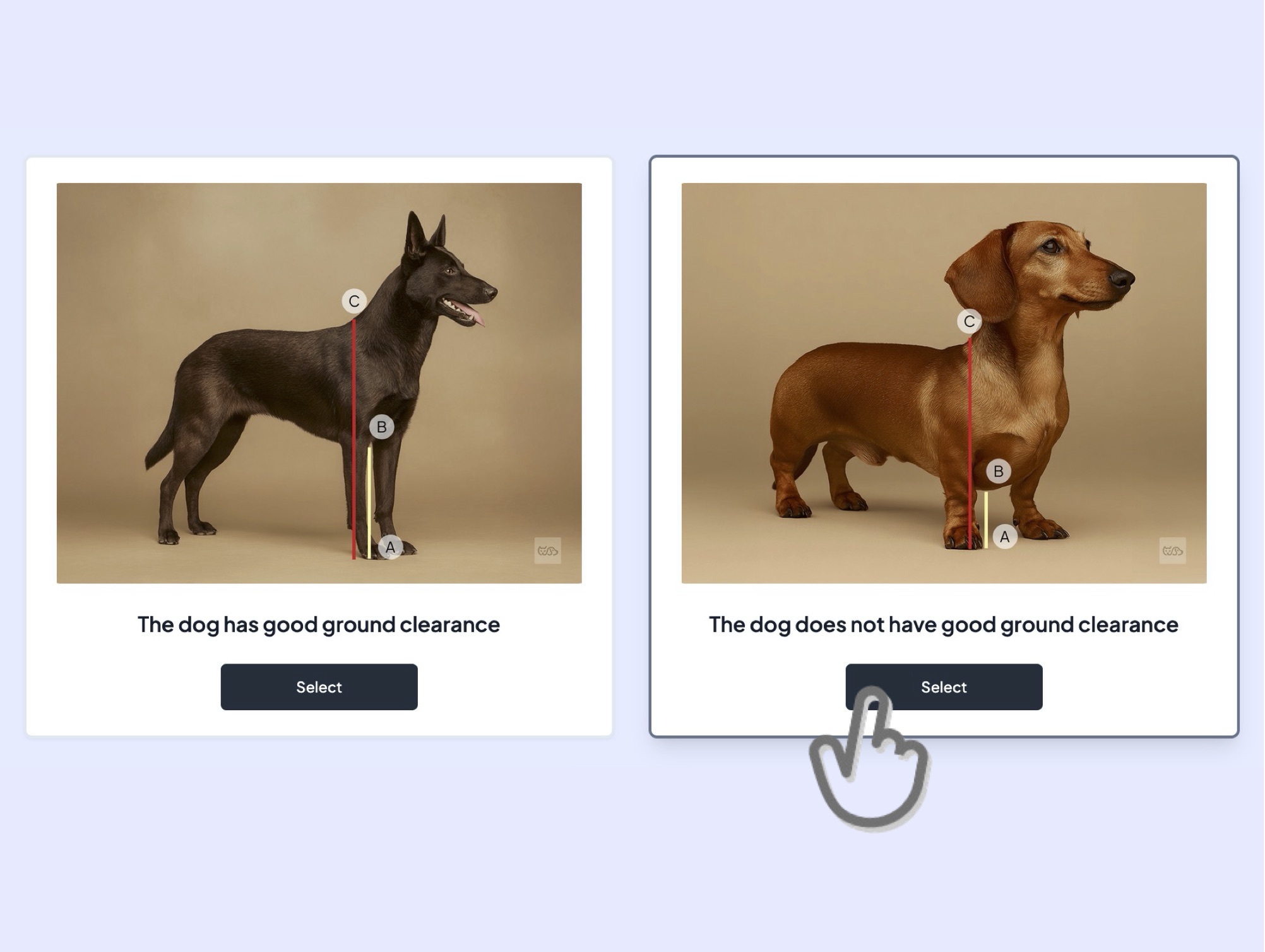
Extreme conformation remains one of the most significant welfare concerns in dogs. Evidence from UK datasets, including VetCompass and Dogs Trust studies, suggests that over 25% of dogs may be affected by at least one exaggerated trait, such as brachycephaly, skin folds, shortened limbs or tails. Even when not immediately life-threatening, these traits can compromise normal behaviours such as breathing, movement and thermoregulation.
Introducing the Innate Health Assessment (IHA)
To address this issue, the All-Party Parliamentary Group for Animal Welfare (APGAW) in the UK has launched the Innate Health Assessment (IHA), a practical, evidence-based screening tool developed with input from the Royal Veterinary College.
Ten conformation criteria
The IHA is a simple visual checklist of 10 conformation criteria, including muzzle length, skin folds, eye position, merle colouring and limb length. It is designed for use by breeders, owners and prospective buyers, without requiring specialised equipment. Its aim is to ‘support more responsible breeding decisions and reduce the propagation of harmful traits’.
Driving change among breeders – and advertisers
The IHA complements existing breed-specific health schemes and aligns with UK legislation restricting the breeding of dogs with harmful conformations. A transitional scoring system allows gradual improvement, with the long-term goal of eliminating extreme conformations from breeding populations. Importantly, the initiative also targets advertisers and media, to avoid promoting dogs with exaggerated features that may drive demand.
A ‘valuable communication and advisory tool’
‘For veterinary practitioners, tools like this provide a valuable communication and advisory support to guide breeders and clients,’ comments UEVP president Volker Moser. ‘The IHA recommendations are largely in line with the FVE and Fecava position paper on healthy breeding. And even though the criteria are not legally binding, they provide a useful tool to help us raise awareness.’