
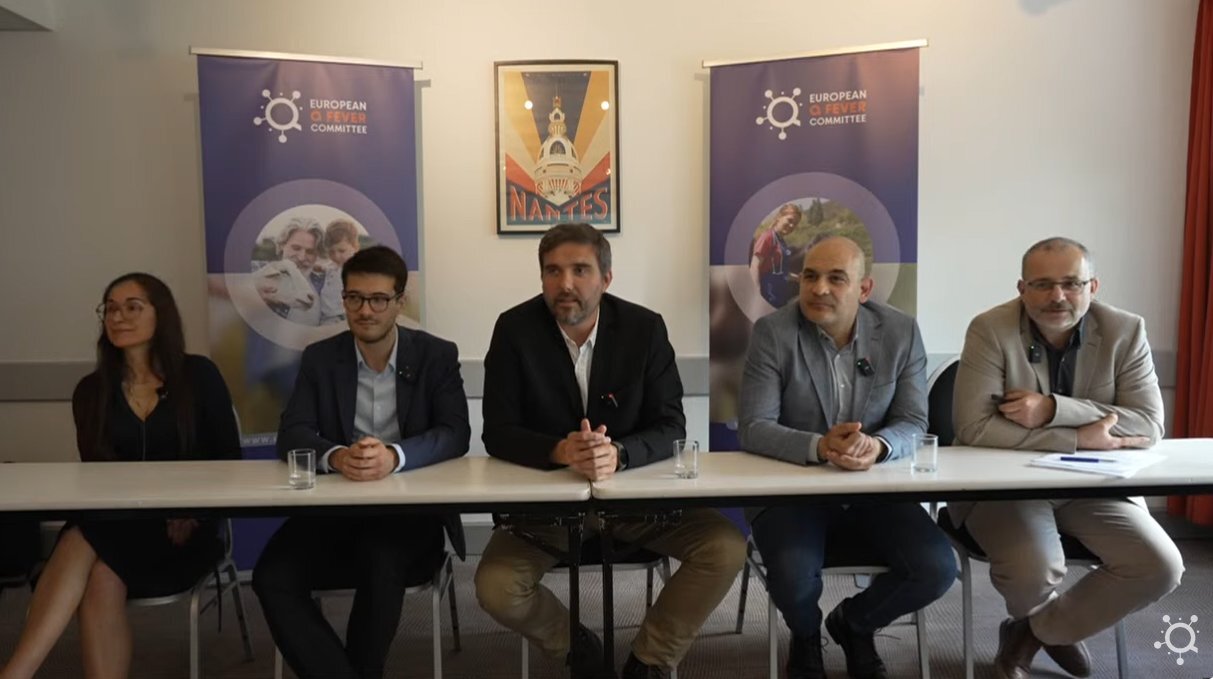
At the occasion of the European Buiatrics Congress in Nantes last month, the European Q Fever Committee shared the results of a survey (8 countries, 330 vets in total) showing a lack of awareness and knowledge among European vets, physicians and farmers about Q fever, also known as coxiellosis.
Moderate level of knowledge among vets
In France and the Netherlands, 80% of farm animal vets showed to have good knowledge of the disease likely due to a previous national Q fever committee (France) or a major human outbreak (Netherlands). Practitioners in Germany, Italy, and Spain had moderate knowledge, while fewer than half of respondents in the UK, Poland, and Belgium were found to have solid knowledge of the disease. The disease was also a topic at the recent Visegrad meeting of veterinary FVE delegates in May, as Montenegro veterinarians reported on several human cases and high numbers of seropositive cattle and sheep.
Enhancing knowledge and response strategies
This mixed level of awareness regarding Q fever in ruminants across Europe highlights the urgent need for a coordinated approach to promote science-based, harmonised recommendations for diagnosis, control and prevention of Q fever. This had led to the launch of its website, which contains publications, proposes factsheets for vets (and in future also for farmers and GPs). The committee aims to ‘foster collaboration among veterinarians, farmers, healthcare professionals,’ in order to ‘enhance knowledge and response strategies to control Q Fever across Europe.’
A multidisciplinary expert group
The Committee, created in 2024, is a multidisciplinary expert group chaired by Professors Raphael Guatteo (France) and George Valiakos (Greece). Other members include Alda Natale (Italy), Ángel Gómez Martín (Spain), Daniel Cifo Arcos (Spain), Jonathan Statham (UK), Laurent Delooz (Belgium), Piet Vellema (Netherlands), Sławomir Koźmiński (Poland) and Thomas Wittek (Spain). The secretariat is run by Vincent Dedet (France).