
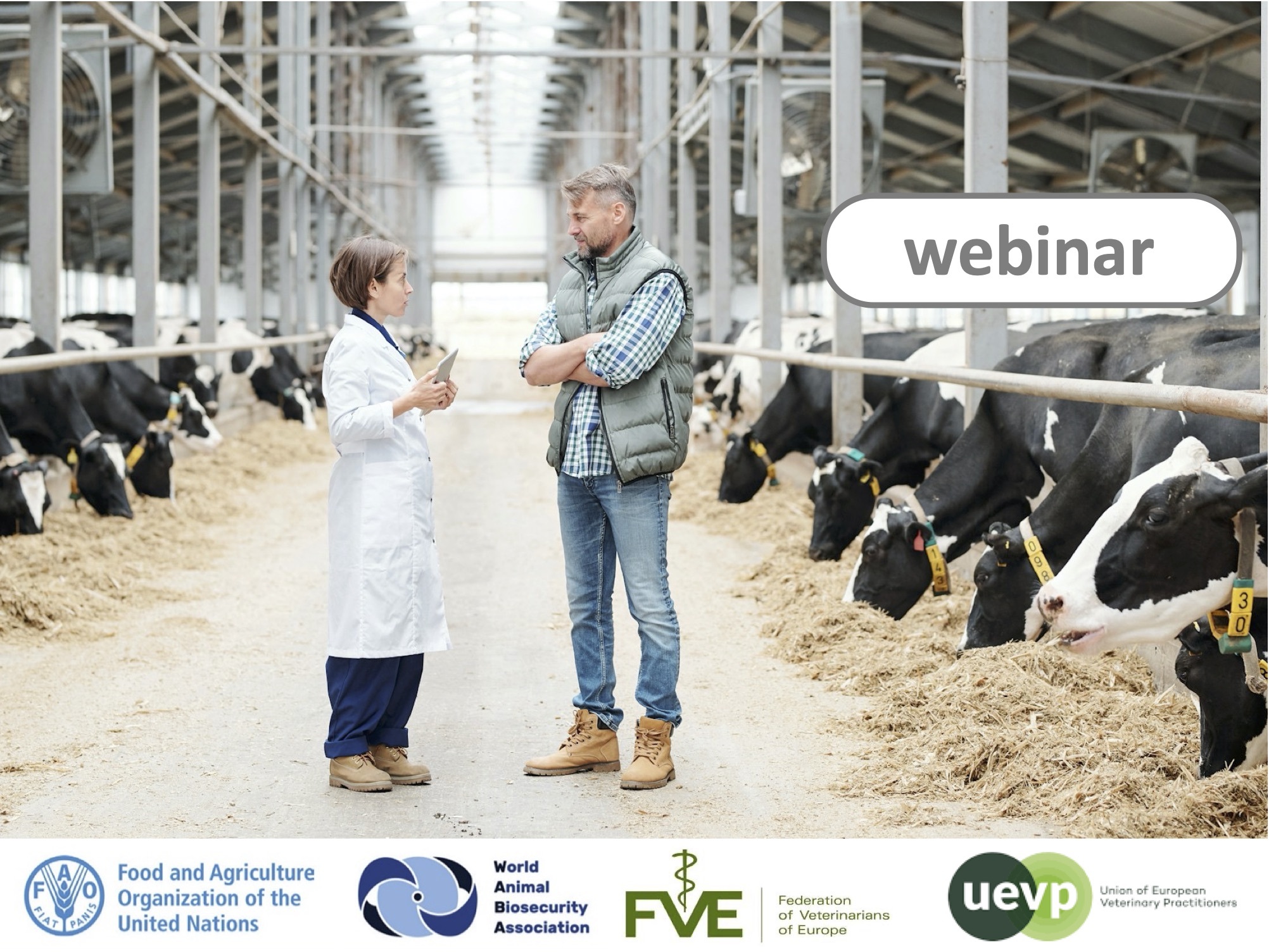
Veterinary leadership in biosecurity is the focus of an upcoming FAO webinar hosted together with the World Animal Biosecurity Association (WABA) on 19 February. The online event will examine veterinary biosecurity performance from strategic, practical and contingency-planning perspectives. Registration is now open.
Strengthening veterinary leadership
FVE President Siegfried Moder will highlight the central role of veterinarians in protecting animal health, public health and the resilience of Europe’s livestock systems. With continued pressure from avian influenza, African swine fever, foot-and-mouth disease and other transboundary threats, biosecurity must be embedded in everyday preventive practice — not only activated during outbreaks.
FVE calls for livestock veterinarians to have a formal, continuous mandate to advise on and monitor farm biosecurity. The EU Animal Health Law, with its preventive farm visits, provides a strong framework. However, vets also need consistent tools, updated guidance and structural support. Evidence shows that science-based assessment methods improve farmer engagement and deliver measurable gains in disease prevention.
Biosecurity, a ‘core veterinary competence’
Next, UEVP President Volker Moser will focus on implementation at farm level. ‘Biosecurity is not an optional add-on — it is a core veterinary competence,’ he commented. ‘As field veterinarians, we are uniquely positioned to translate strategy into daily farm practice, turning risk assessment into concrete, farm-specific action. Sustainable animal health, public health and resilient livestock systems start with continuous, hands-on veterinary leadership in biosecurity.'
Examples from herd health management will demonstrate how structured scoring systems and digital tools help identify gaps and prioritise action. Despite challenges such as limited time and resources, consistent veterinary advice has proven to reduce disease burden and strengthen farm resilience.
Biosecurity in outbreak response
Milenko Simovikj, Acting Head of the Contingency Planning Unit at North Macedonia’s Food and Veterinary Agency, will address biosecurity within contingency planning. He will outline key measures during outbreaks, including zoning, movement controls, PPE use, disinfection and safe carcase disposal. Together, the speakers will underline a clear message: effective biosecurity depends on strong veterinary involvement at every stage.
More information about the webinar can be found here.
(photo ©Getty images/Unsplash)